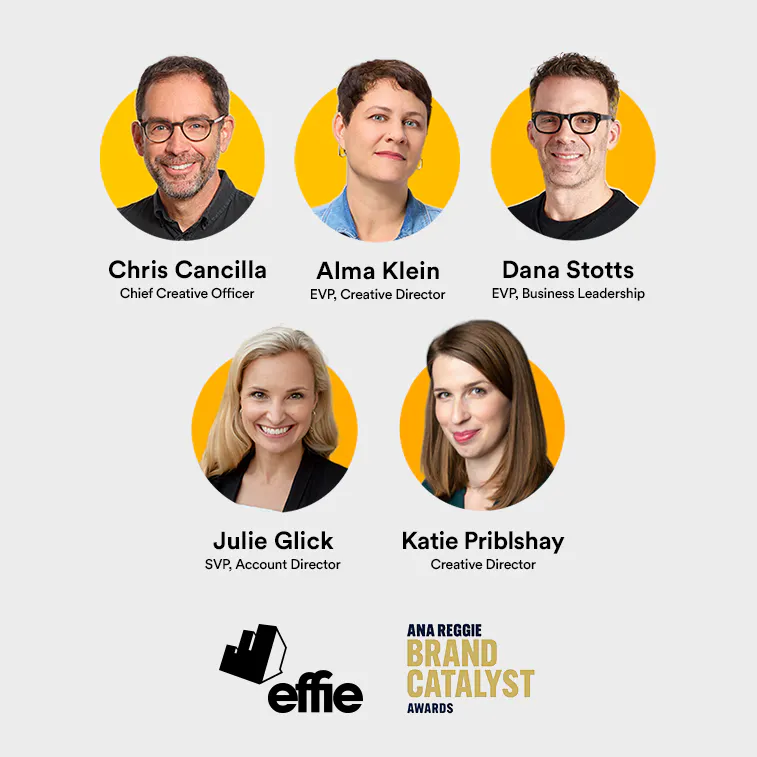
As award season approaches, Arc is looking ahead, by looking back. This year, several Arc leaders served as jurors across the industry’s most respected programs, including the Effie and REGGIE Brand Catalyst Awards. The experience offered more than a front-row seat to top-tier work; it provided a clear view of how marketing, creativity, and effectiveness continue to evolve year over year.
Across the real and virtual jury rooms, a few themes consistently emerged: increased pressure to connect awareness to real business outcomes, a growing need to better define “commerce,” and a noticeable improvement in how stories are told. Together, these signals point to a broader recalibration of what winning work looks like today.
Judging isn’t just an honor. It’s a benchmark. It sharpens perspective, challenges assumptions, and elevates the standards we hold ourselves and our clients to every day. Here’s what Arc’s jurors took away from the judging rooms this year.
Clear Thinking, Stronger Craft, Smarter Use of AI
One notable shift was the improvement in case submissions themselves. Entries were more concise, better structured, and easier to follow than in years past. AI likely played a supporting role, helping writers sharpen clarity and flow, without replacing human judgment or strategic thinking.
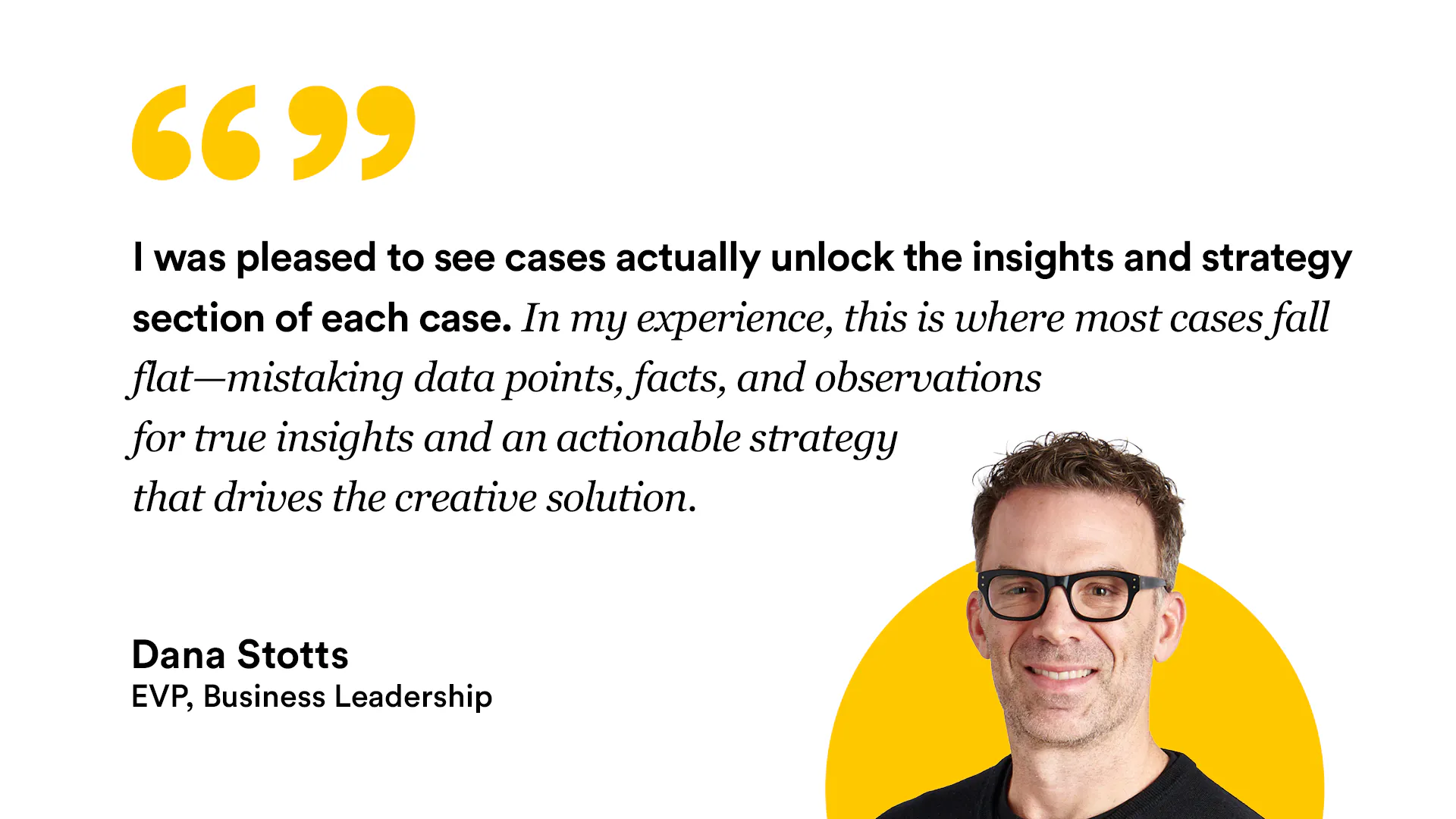
“We discussed this in our jury room and many of the experienced judges noticed a similar trend,” says Dana Stotts, EVP, Account Director. “Some commented they could notice the presence of AI in the cases as some things were repeated throughout the case write-ups, but in the cases I judged, it was evident AI was used as a tool to the writer, not just used to write the case.”
Judging conversations also moved beyond surface-level metrics into deeper discussions around long-term brand impact, cultural relevance, and responsible innovation, raising the bar for what success means.
Commerce Is No Longer a Simple Category Distinction
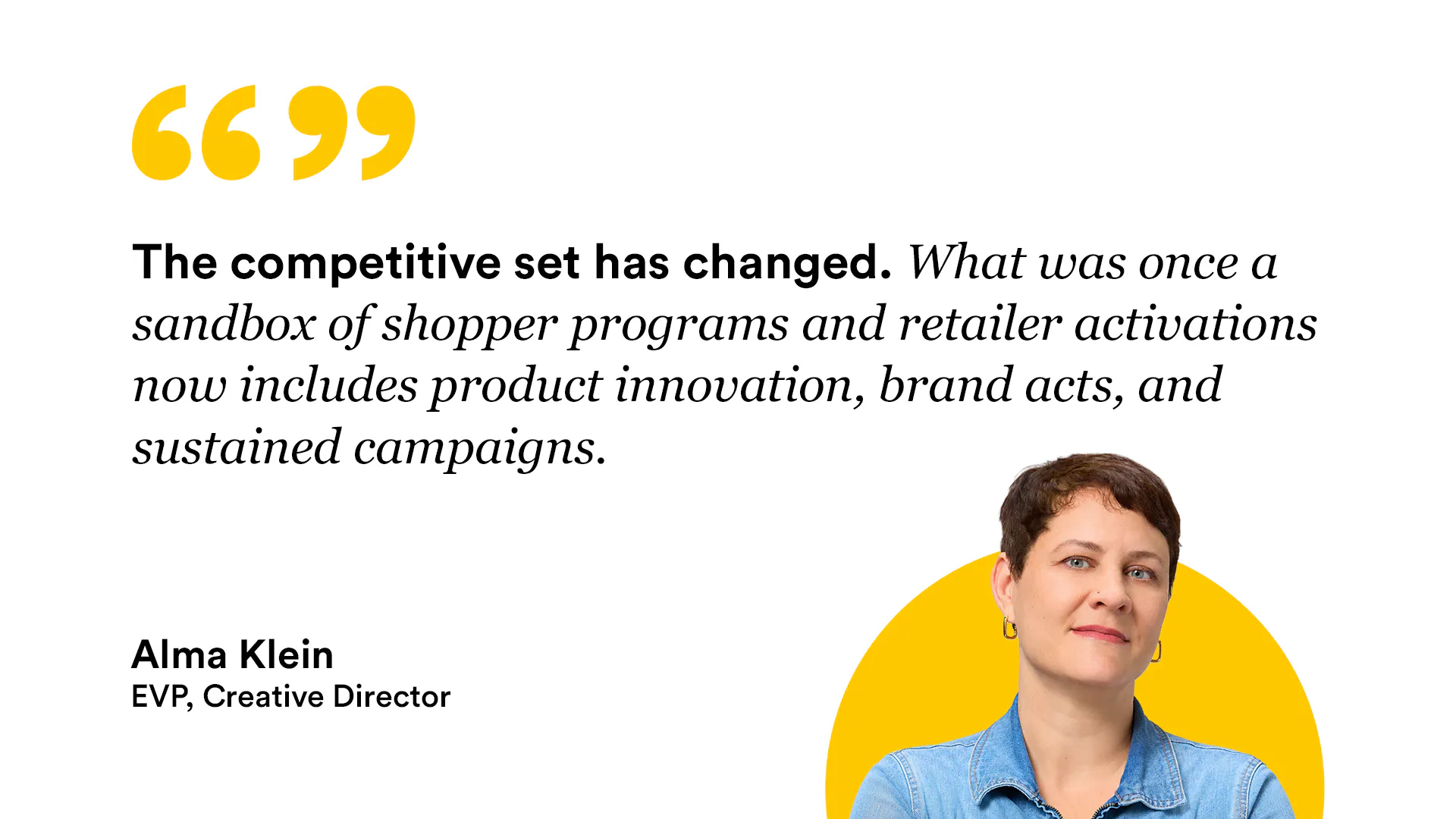
Commerce continues to expand, and with that growth comes complexity. Jurors are now evaluating work across a much broader and less clearly defined landscape, making it harder to define where commerce begins and ends.
This year’s entries showcased how brands are using technology to build deeper, more connected paths to purchase – virtual trials, AR-enabled experiences, personalized media networks, and integrated social shopping. The strongest examples focused less on one-off conversions and more on sustained brand relationships.
At the same time, jurors flagged a challenge the industry still needs to solve.
“Commerce and shopper marketing should no longer be lumped together,” says Chris Cancilla, Chief Creative Officer. “While commerce is broad and expansive, shopper marketing is a very specific discipline focused on winning at retailers. I’d love to see the strategy and creativity of true shopper programs celebrated more specifically.”
As commerce continues to evolve, the need for clearer definitions and smarter category distinctions will only increase.
Connect the Results
While many entries excelled at generating attention, fewer successfully connected that attention to measurable action.
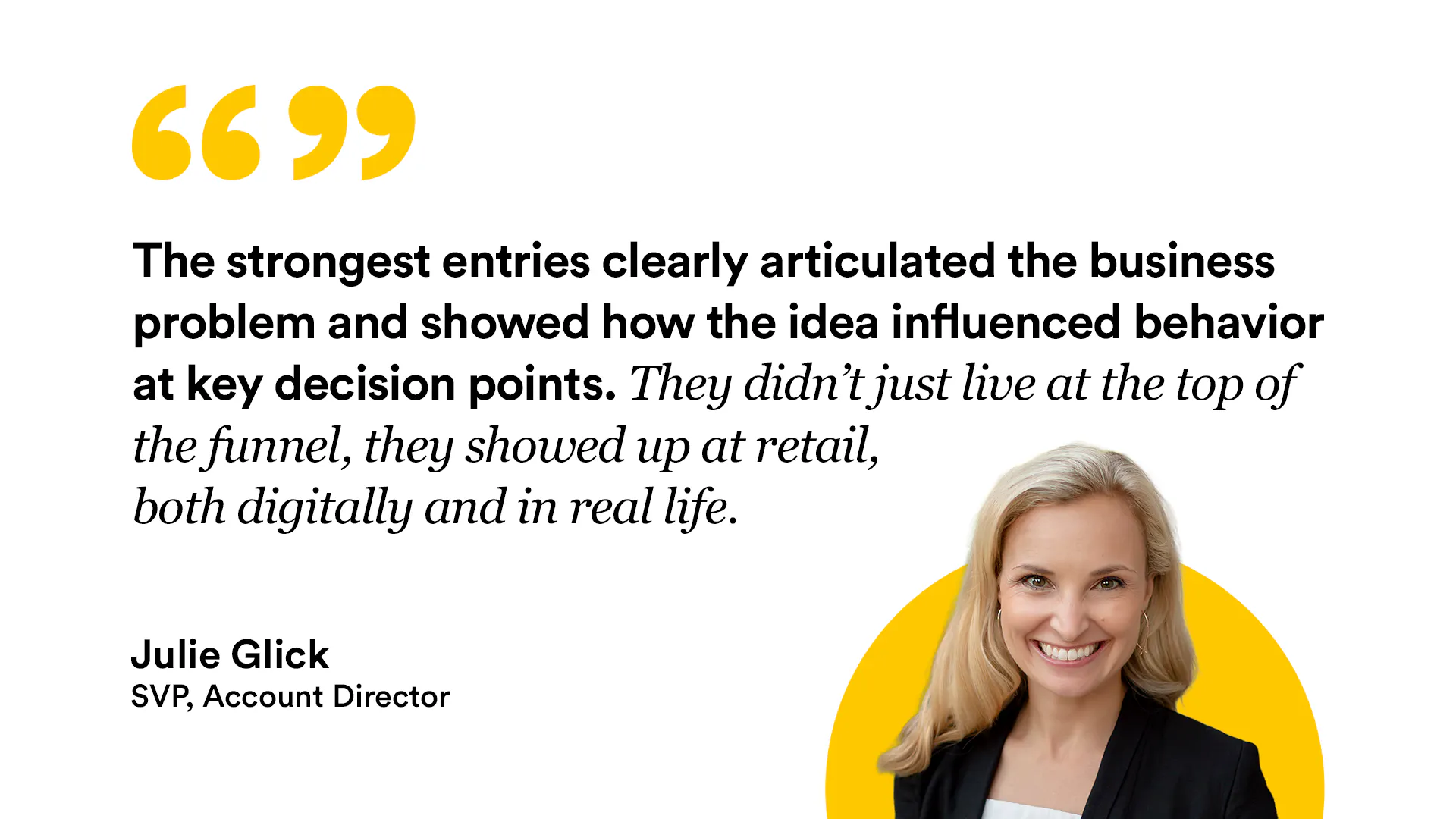
“Several cases showed strong impressions, engagement, or search lift,” says Julie Glick, SVP, Account Director. “But they stopped short of tying that momentum to shopper behavior or sales.”
The most effective work demonstrated clear thinking across the entire funnel, linking business challenges to insight, insight to execution, and execution to tangible results.
The takeaway for future entrants is straightforward – close the loop. Awareness matters, but only when it leads to action and results.
Human Insight Still Wins in an AI‑Driven World
Despite advances in data and AI, judges agreed on one thing: human insight remains the most critical ingredient in standout work.
AI can identify patterns, accelerate analysis, and improve efficiency. But it can’t replace empathy, cultural understanding, or strategic interpretation.
Campaigns that successfully combined advanced analytics with genuine human understanding rose above the rest, proving that technology works best when guided by human judgment.
Better Stories, Told Better
If there was one near-universal differentiator between good work and great work, it was storytelling.
“Visuals are doing more of the work now—and that’s a good thing,” Alma notes. “They help judges absorb information faster and understand ideas more clearly.”
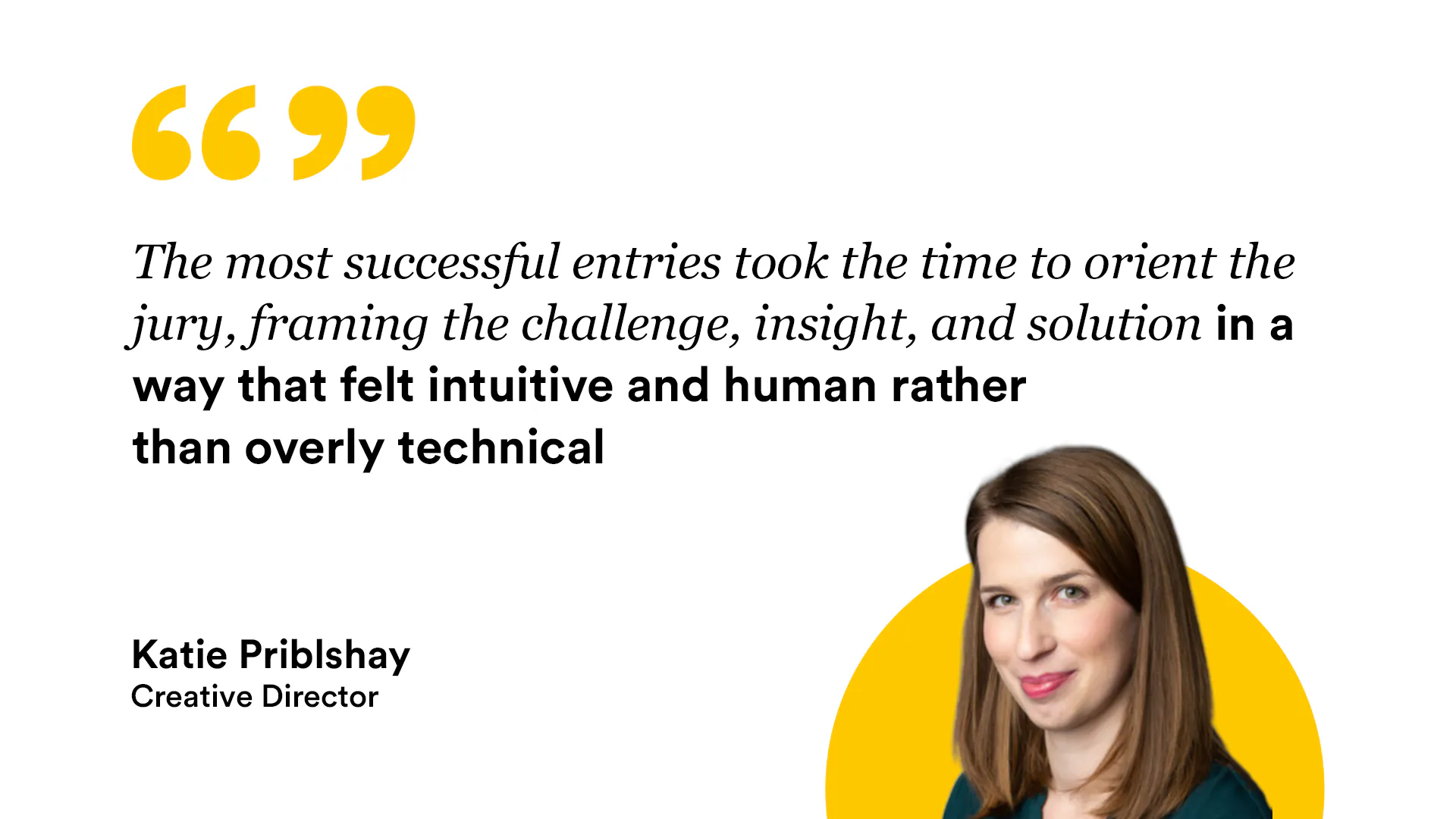
“What stood out most this year was how clearly storytelling separated strong work from the rest—especially in categories where jurors may not live and breathe the space every day,” said Katie Pribylshay, Creative Director.
In crowded judging rooms, clarity is essential.
What it Takes to Medal
At the final stage of judging, strong results are expected. What separates finalists from medalists is how powerfully a distinctive idea comes through, creatively and in the case itself.
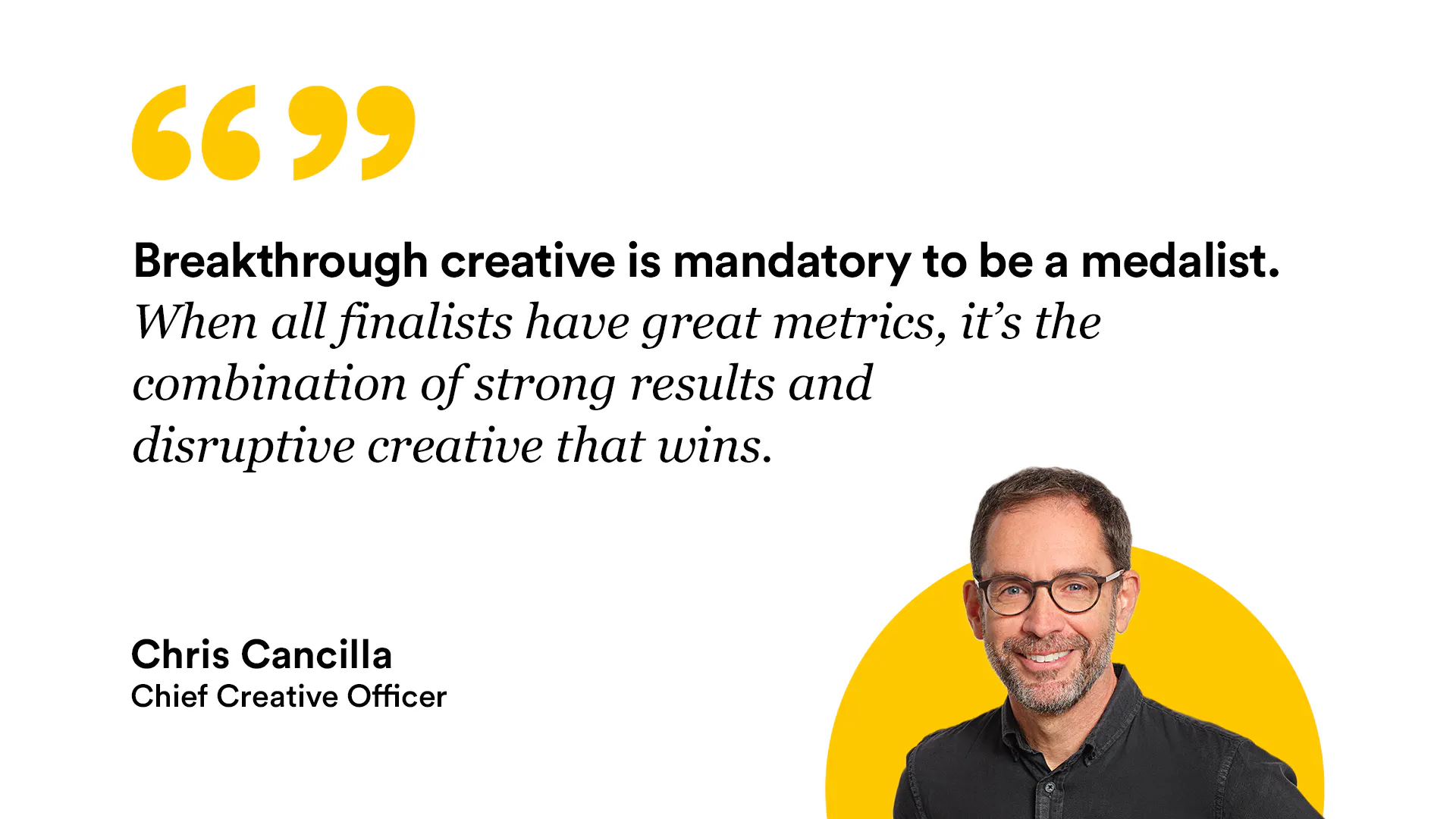
“Breakthrough creative is mandatory to be a medalist,” says Chris. “When all finalists have great metrics, it’s the combination of strong results and disruptive creative that wins.”
Jurors emphasized that winning cases are clearly and confidently presented – written with intention from start to finish, and structured as cohesive stories that guide jurors without confusion or friction. Brevity, polish, and consistency matter. Katie put it simply: “My biggest piece of advice: assume the juror knows nothing about your category. Start with clarity. Strip out jargon, focus on the human problem you were solving, and tell a straightforward story about how your idea worked, and why it mattered.”
Case videos also played a critical role when used effectively, bringing energy and context without simply repeating the written submission.
And one final reminder on AI: use it as a collaborator, not a substitute. Cohesion and clarity still win.